
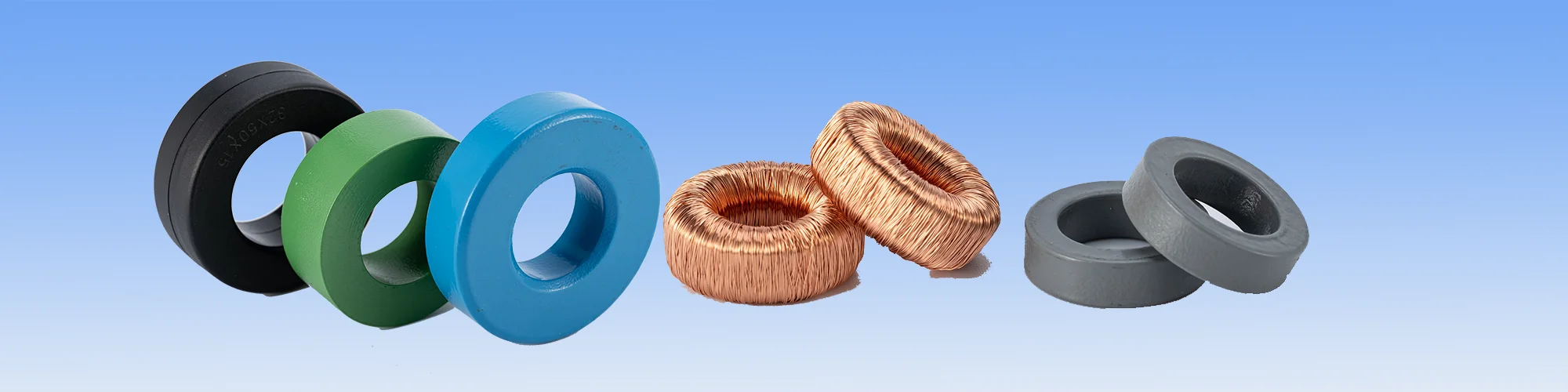
As the new energy vehicle (NEV) industry continues to evolve at an unprecedented pace, vehicle intelligence and electrification are advancing rapidly, driving a comprehensive transformation of automotive electronic systems. From On-Board Chargers (OBCs) and motor inverters to various onboard power supplies, the performance requirements for core components are becoming increasingly demanding.
As one of the most critical foundational materials in automotive electronics, automotive-grade amorphous and nanocrystalline magnetic cores play a vital role in ensuring the stability, efficiency, and service life of vehicle power systems. They have also become one of the most advanced technologies in the field of magnetic materials.
Many people wonder: amorphous and nanocrystalline magnetic cores have long been widely used in industrial equipment and household appliances. Why is developing an automotive-grade version so challenging? Today, we explore the four major technical barriers behind automotive-grade magnetic core development.
## 1. Wide Temperature Range: Achieving Stable Magnetic Performance Is Extremely Challenging
The operating environment of electric vehicles is far more demanding than that of conventional consumer electronics. Throughout all driving conditions—including startup, acceleration, deceleration, and continuous operation—automotive electronic systems must withstand temperatures ranging from **-40°C to over 150°C**.
Although amorphous and nanocrystalline magnetic materials offer excellent magnetic properties, their performance is highly sensitive to temperature variations. Conventional industrial-grade magnetic cores often experience magnetic property drift, reduced saturation flux density, and significantly increased core losses under high-temperature, high-load conditions. These issues directly reduce power conversion efficiency and may compromise the stability of onboard power systems.
To overcome this challenge, engineers must optimize high-performance alloy compositions, refine the material's microstructure, and continuously improve precision annealing and material modification processes. These efforts enhance heat resistance and increase the Curie temperature, ensuring stable magnetic performance across an ultra-wide operating temperature range. Extensive formulation optimization and thermal validation testing make temperature stability one of the first major hurdles in automotive-grade magnetic core development.
## 2. High-Frequency Operation: Ultra-Low Core Loss Requires Advanced Material Engineering
Unlike conventional internal combustion vehicles, electric vehicles operate with high-frequency power electronics, typically ranging from **tens to hundreds of kilohertz (kHz)**. Under such conditions, magnetic core losses directly affect vehicle efficiency and component lifetime.
Standard magnetic cores suffer from increased eddy current loss and hysteresis loss during high-frequency operation. This not only reduces energy conversion efficiency but also generates excessive heat, accelerating component aging and potentially causing system failures over long-term operation.
Meeting automotive-grade ultra-low loss requirements demands breakthroughs beyond conventional manufacturing methods. Engineers must precisely optimize alloy composition, control nanocrystalline structures, and implement highly controlled annealing processes to refine magnetic domain structures and minimize high-frequency losses at the source. Achieving these goals requires exceptional expertise in material science and microstructure engineering.
## 3. Long-Term Reliability: Maintaining Consistent Performance for Over Ten Years
Automotive components are expected to deliver exceptional reliability, stability, and durability. Industry standards typically require critical electronic components to operate reliably for **more than 10 years** while withstanding vibration, mechanical shock, repeated thermal cycling, and other harsh environmental conditions.
The manufacturing process of amorphous and nanocrystalline magnetic cores is highly sophisticated. Every step—from alloy melting and rapid solidification ribbon production to precision winding, annealing, insulation, and encapsulation—requires extremely tight process control. Even slight variations in melting temperature, quenching speed, or annealing duration can alter the amorphous structure and result in inconsistent magnetic performance between production batches.
Therefore, developing automotive-grade magnetic cores is not merely about material innovation. It also requires establishing a comprehensive, highly standardized manufacturing and quality control system. With large-scale production capabilities and extensive reliability testing, manufacturers can continuously optimize production parameters and ensure outstanding batch-to-batch consistency.
## 4. Strict Automotive Qualification: High Entry Barriers Throughout the Supply Chain
Even after overcoming material development and mass production challenges, manufacturers must still pass rigorous automotive qualification standards before entering the vehicle supply chain.
Companies supplying automotive magnetic cores are generally required to obtain **IATF 16949** automotive quality management system certification. During qualification, manufacturers are thoroughly evaluated not only for magnetic performance—including temperature stability, high-frequency loss, and long-term durability—but also for manufacturing processes, quality management systems, traceability, and overall production capability.
Many companies experienced in industrial and consumer applications find it difficult to meet the automotive industry's stringent standards for precision, consistency, and reliability. Combined with lengthy qualification cycles and comprehensive audits, these requirements significantly increase the barriers to entry for the automotive market.
## Conclusion
Developing automotive-grade amorphous and nanocrystalline magnetic cores has never been simply a matter of material innovation. It requires comprehensive expertise in alloy design, precision manufacturing, process control, mass production, reliability verification, and automotive quality management.
As electric vehicles continue moving toward higher power density, longer driving range, and greater intelligence, onboard power systems are becoming increasingly high-frequency and compact. Consequently, performance requirements for automotive-grade magnetic cores will continue to rise.
Only by continuously overcoming these technological challenges can manufacturers build a stronger foundation for the next generation of new energy vehicles.