
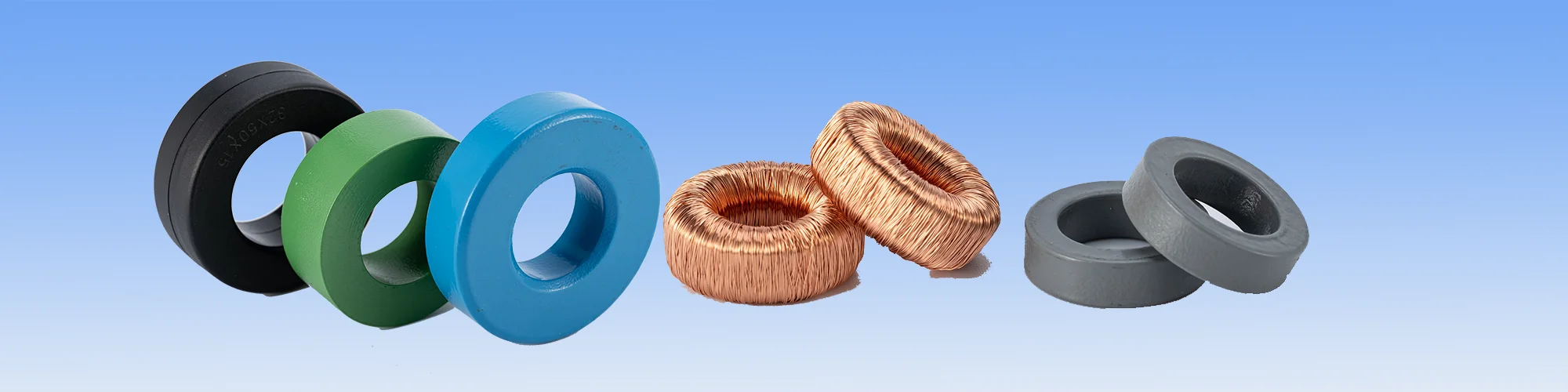
When discussing AI computing power, public attention almost always lands on big-name hardware: GPUs, High Bandwidth Memory (HBM), and advanced semiconductor chips. However, very few notice the humble, crucial components scattered across server motherboards and accelerator cards: inductors.
While many view inductors as simple passive components, they serve as the vital power foundation keeping massive AI servers and high-end accelerator cards running continuously and reliably. Without high-quality inductors, even the most advanced GPU suffers from voltage fluctuations, performance throttling, sudden system crashes, or hardware damage.
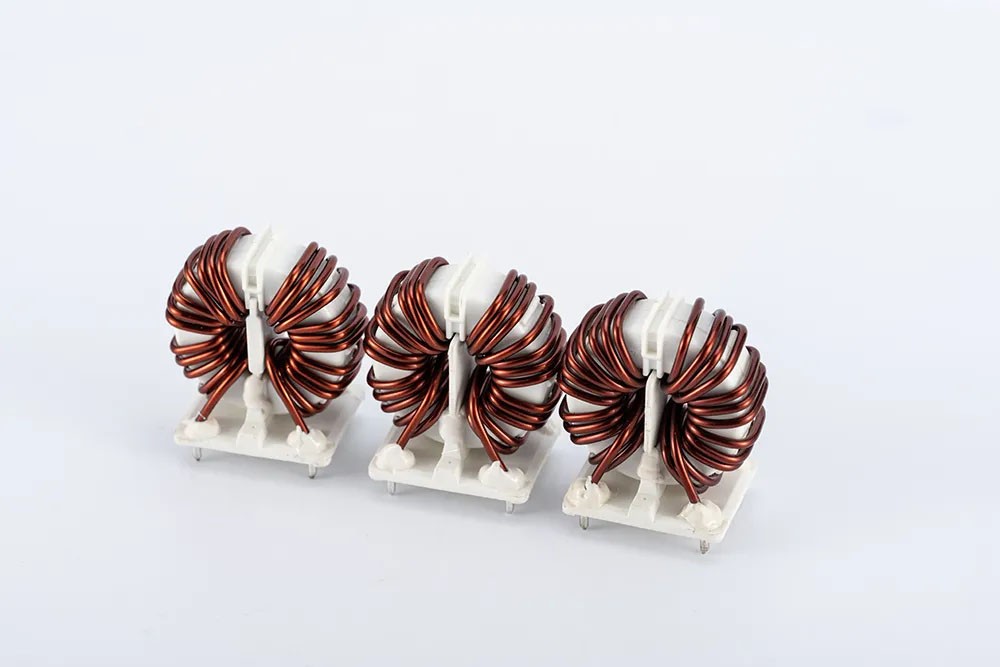
Key Takeaway: GPUs act as the "brain" of AI computing power, but inductors form the essential "circulatory system" that keeps that brain running stably.
1. What Is an Inductor, and Why Is It Essential for AI?
At its core, an inductor consists of a coil and a magnetic core. Its primary function is storing energy in a magnetic field and opposing sudden changes in electric current.
Capacitors store energy in an electric field.
Inductors store energy in a magnetic field, acting as an internal energy-buffering flywheel for electronic circuits.
During operation, inductors perform a dynamic regulating role:
Current Spikes: The inductor generates a reverse voltage to cushion transient current surges, preventing circuit overload.
Voltage Drops: The inductor releases its stored magnetic energy to supply power instantly, maintaining circuit stability.
AI GPUs operate under extreme conditions: working voltages as low as hundreds of amperes, and millisecond-level load jumps. During Large Language Model (LLM) training, even a micro-fluctuation in voltage can trigger data corruption or crash an entire server cluster.
Inductors fulfill three non-negotiable roles in AI hardware:
Instant Energy Storage & Voltage Regulation: Fast-charging and discharging capabilities absorb dynamic load switches, clamping voltage variations within a safe window.
DC-DC Buck Conversion Support: Crucial for Voltage Regulator Module (VRM) circuits stepping down high voltage (48V) to ultra-low chip voltages.
EMI Filtering & Noise Reduction: Combined with capacitors in LC filter loops, inductors suppress high-frequency electromagnetic interference (EMI) to meet strict data center compliance standards.
2. Demand Surge: Inductor Volume and Value Are Doubling
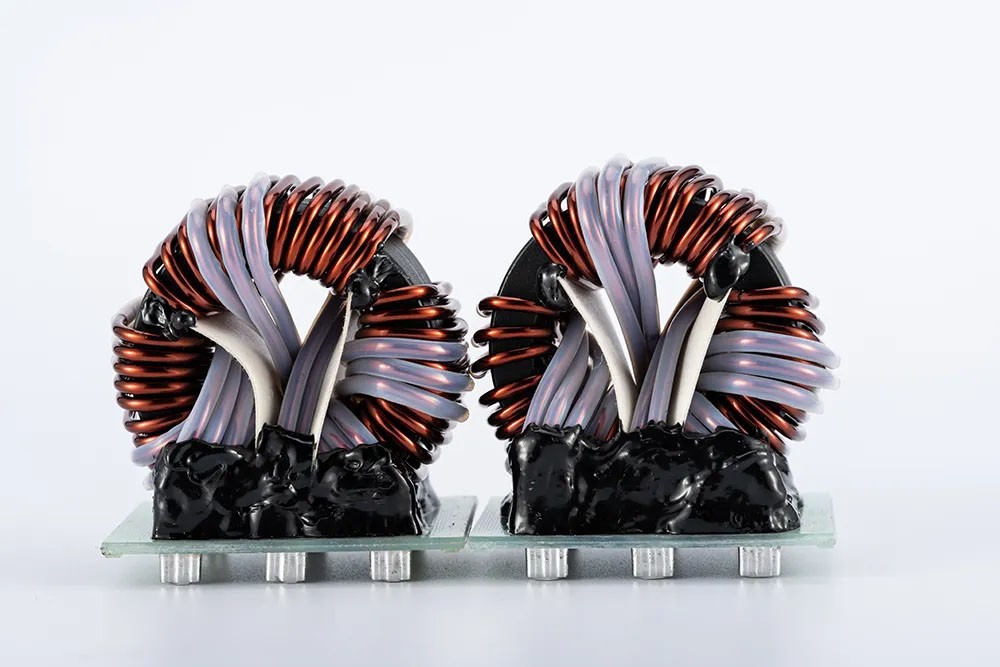
As AI computing demands explode, the quantity and market value of inductors are skyrocketing.
Traditional Servers: Require roughly 30 to 50 standard inductors per unit.
4-Card AI Training Servers: Require 80 to 120 specialized inductors per unit.
TLVR) coupled power inductors per card.
10,000 magnetic cores per cluster.
| Feature | Standard Molded Inductor | AI-Grade TLVR Coupled Inductor |
| Primary Use | General Consumer Electronics | AI Servers, High-End GPUs |
| Unit Cost | Low | Multiplied (High Premium) |
| Response Speed | Standard | 3x to 5x Faster |
| Voltage Control | Moderate | within ±15mV) |
As power architectures shift toward 48V high-voltage racks and Vertical Power Delivery (VPD), orders for high-saturation, low-loss metallic soft magnetic cores continue to surge, bringing long-term growth to upstream magnetic material suppliers.
3. The 3 Core Functions Powering AI Infrastructure
AI chips present a severe engineering paradox: extremely low working voltage coupled with hundreds of amperes of current switching in milliseconds. When an LLM shifts from idle to full power, GPU power consumption jumps to kilowatt levels instantly. Inductors manage this extreme environment through three key functions:
① Safeguarding the GPU Voltage Window
Conventional discrete inductors respond slowly, creating severe voltage dips during dynamic load shifts. Next-generation ±15mV. When power demand surges instantaneously, the inductor releases its stored magnetic energy like a high-speed "emergency power bank."
② Enabling 48V High-Voltage VRM & VPD Architectures
Data centers are transitioning from 12V bus bars to 48V high-voltage rack architectures to lower line losses and increase power density. In VRM step-down circuits and Vertical Power Delivery (VPD) systems, power inductors are indispensable. Next-generation architectures (such as NVIDIA GB300 and Rubin platforms) mandate TLVR coupled inductors as standard power infrastructure components.
③ Eliminating EMI Noise in Multi-GPU Clusters
High-frequency switching circuits in AI servers generate significant electromagnetic ripple, which distorts calculations and leaks signals. Inductors paired with capacitors form LC filter circuits that eliminate high-frequency noise, ensuring continuous, long-term stability across multi-node GPU clusters.
4. Outlook: Long-Term Growth for Magnetic Core Inductors
If GPUs are the "calculating brain" of artificial intelligence, high-performance inductors are the "circulatory system" keeping that brain alive. Amorphous and nanocrystalline soft magnetic cores serve as the underlying foundation of this power ecosystem.
Driven by the rapid adoption of multimodal AI models, edge AI inference, and autonomous driving domain controllers, key technology trends—including ultra-dense component miniaturization—will fuel steady, long-term market demand for high-performance soft magnetic cores and advanced inductors.